
Should I Reupholster My Couch or Buy a New One?
Last updated
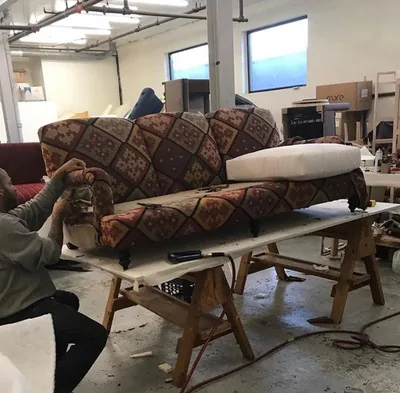
The couch has been in the living room for twenty years. The cushions have gone flat, the arms are worn shiny, and you've spent a few evenings scrolling new sofas and wondering why the ones in your budget look like they'll be sagging by spring. Then you got a quote for reupholstering the old one, and it came back close to the price of a good new couch.
That's usually when you start to wonder whether a new couch would even last as long as this one has. It's a fair question, and the answer mostly comes down to what's under the fabric.
Reupholster or Buy New, and Where It Usually Lands
Should I reupholster or buy new?
Reupholster if the frame is solid hardwood, the couch is comfortable, and it fits your room and your doorway. Buy new if the frame is particleboard or stapled softwood, or it twists when you lift one corner, because new fabric won't fix a structure that's already failing. Reupholstering a good sofa costs about what a well made new one does, so the frame is what decides it.
Start With the Frame, Because Everything Else Gets Replaced
When we reupholster a couch, almost everything you can feel comes out. The fabric, the foam, the batting and the webbing all go, and the springs get retied or replaced. The one part that stays is the frame, so the frame is the whole question.
You can check it yourself in about five minutes. Take the cushions off and lift one front corner of the couch a few inches off the floor. A solid frame shouldn't flex at all. If the opposite corner rises with it and nothing creaks or twists, that's a good sign. If the corner you're holding comes up alone and the whole thing seems to bend, the frame is loose or it's made of something that was never going to last.
Then tip it back and look underneath. If the dust cover is torn or loose, you can often see the frame through it, and what you want to see is solid wood, ideally with small blocks of wood glued and screwed into the corners where the rails meet. Particleboard, thin plywood held together with staples, or a frame that's bolted rather than joined are all reasons to think twice. Push down on the deck where the seat cushions sit. Springs tied by hand in a grid, or heavy wire springs that feel firm, are worth keeping. A thin, flimsy layer of webbing that sags under one hand usually isn't.
Treat this as a first look, since some older frames look rough from underneath and turn out fine once they're opened up. A well made, sturdy wood frame can be reupholstered more than once, and that's exactly the frame you're looking for.
What Reupholstering Gets You That a New Couch Doesn't
Reupholstering is rarely the cheap option, and we'd rather say that up front. What you're paying for is a frame that has already proven it can last, rebuilt inside with new springs and foam, and covered in a fabric you picked yourself instead of the handful a showroom offers.
That last part matters to a lot of people. When the two prices come out about even, picking your own fabric is often what tips it toward reupholstering. You also keep the exact size, depth and seat height you're used to, which is harder to find in a store than it sounds. If the couch is the right length for the wall between the windows, that's worth something.
Older furniture tends to be built heavier, too. It's common to find an old couch with a solid oak frame, still in good shape, that just looks sad. That describes a lot of what we see in Upper East Side and Park Slope apartments: a sofa from the 1960s or 1980s with a hardwood frame and hand-tied springs, wearing tired fabric. Our sofa reupholstery page goes through what a full job involves, from stripping the frame to new foam and fabric.
And some people just don't want a good frame going to the curb. Keeping a well made piece out of the landfill is reason enough for them.
When Buying New Is the Better Call
Sometimes it isn't worth it, and we'll say so when we see the photos. If the frame is particleboard or stapled softwood, new fabric is money spent on a structure that's already giving up. The same goes for a couch you never found comfortable. Reupholstering can change the firmness of the cushions, but it can't change the shape of the seat or the angle of the back without rebuilding the frame.
Sleeper sofas need a closer look. If the pull-out mechanism is bent or the bed frame has rusted through, the cost of fixing that on top of the upholstery can tip it toward new.
A plain, mass-market couch that you feel nothing for is also usually a buy-new, because reupholstering an ordinary couch tends to cost more than replacing it. The cases where reupholstering clearly wins are a well built frame, a piece you love, or a shape and size you can't find anywhere else.
One thing that shouldn't put you off is a single cracked rail or a loose leg on an otherwise solid hardwood frame. That's a repair, and our furniture repair bench handles it while the fabric is off, so it's invisible when the couch comes back.
The New York Part of the Decision
In most of the country, buying new means a delivery truck and a driveway. In New York it can mean measuring a stairwell with a tape measure and hoping. A new sofa has to fit through the building door, around the turn on the third floor landing and through your apartment door, and plenty don't. Getting a big piece back out can be just as hard, and sometimes the only way out is taking it apart.
A couch you already own has already made that trip. When we pick it up we wrap it, carry it down the walk-up or book the freight elevator, and bring it back the same way. Most Manhattan co-ops and condos want a certificate of insurance before anyone moves furniture, and we send that with the quote. Getting rid of an old couch in the city is its own errand, too, and keeping it means you skip it.
If you're still deciding who to trust with it, we wrote about how to find a good upholsterer in New York and the building questions worth asking before anyone shows up.
If You Keep It, Pick the Fabric for the Next Twenty Years
Once you've decided the frame is worth it, the fabric is where you make it yours. If there are kids or pets on the couch, the weave matters more than the color, and we've written about which upholstery fabrics are easiest to keep clean with kids and pets. If your apartment runs damp in the summer, the fiber matters too, and the same tight synthetic weaves tend to win there as well, which we cover in which sofa fabrics hold up in a humid apartment.
We bring sample books to your apartment so you can see the color in your own light, or you can send us your own fabric. Most sofas are back two to four weeks after pickup, and the variable is fabric lead time. If you want it home before family arrives for the holidays, ask about which fabrics are in stock when you get the quote.
Send us a few photos of the couch, one of the underside with the dust cover visible, and tell us what happened when you lifted a corner. We'll tell you straight whether the frame is worth rebuilding or whether you'd do better with a new one. Quotes from photos are free. Pickup and delivery are available, with the charge shown on the written quote. Call us at (914) 449-4334, or read more about sofa reupholstery in New York.