
Antique Furniture Restoration in New York City
Worried that restoring your antique will destroy its value? You are right to be: over-restoration destroys value, because much of what an antique is worth lies in the original finish, the patina and the way it was built. So we start with preservation. NYC Reupholstery documents what is original before any work starts, does not strip a finish that only needs cleaning, and keeps original horsehair when it is in good condition. What has to be rebuilt is rebuilt the way it was made: hand tied coil springs, stitched edges, tacks instead of staples, hide glue on the frame. More than 25 years restoring antiques for New York apartments and estates, with pickup across the five boroughs and Westchester. Text photos, including the underside, to (914) 449-4334 for a written restoration quote.
Last updated
Get Your Free Quote Today!
914-449-4334Or Send Your Details
*We will only use your information to contact you about your request. Please view our privacy policy if you have any questions.
If this sounds familiar
"I was told restoring it would kill the value"
One person says never touch it. Another says refinish it. Both can be right, depending on the piece. The original surface and the original upholstery foundation are what matter to value, so those are kept wherever they can be. Loose joints, failed webbing and a shredded show cover do nothing for value, and those are what we repair.
"It was recovered once already, badly"
New York apartments are full of antiques that were redone with foam and staples. A Victorian settee stuffed with foam sits wrong, and a bergère stapled instead of tacked loses the line of its frame. We take the piece back to the frame and rebuild it the way it was made: webbing, hand tied springs, burlap, stuffing, stitched edge rolls, muslin, then the cover.
"They belonged to my grandmother"
Most of the antiques we see will never be sold. They are being restored so they can be used and handed on. That changes the brief: comfortable enough to sit in every day, correct enough that the next restorer fifty years from now can work on it again.
What people worry about, answered straight
Will restoration destroy the value of my antique?
Over-restoration does. Careful restoration does not. We do not strip a piece that only needs cleaning and a fresh coat of wax, because the original surface is part of what makes it an antique. Joints are reglued with hide glue so the work is reversible. Original horsehair in good condition is cleaned and reused, since it has plenty of spring left after a hundred years.
Before any work starts we document what is original, and the written quote says what is being done to each part of the piece, not just a number.
Will it be done properly, by someone who knows the period?
Ask any restorer whether they talk about preservation before refinishing, and whether they strip the piece back to its frame or only recover it. Our answers: preservation first, and back to the frame. Tufting, nailhead trim, period fabrics, carving, veneer and marquetry repair, shellac and French polish are all in-house work. We guarantee the job will be done right, or we will make it right.
How long will it be gone, and will I hear anything?
Antique work is slower than standard reupholstery because it is done by hand. You get a timeframe with the quote, and you deal with Marcos and the workshop by name while the piece is with us.
From a customer review: "I was given consistent updates about the progress of the job and photos along the way." Shelly Highland, couch and loveseat.
When an antique needs restoration, not just a new cover
- Springs have dropped and the seat is uneven or sits far lower than it should
- A previous recover used foam and staples on a piece that was hand tied
- Carving, molding or veneer is missing, lifted or broken
- The finish is alligatored, flaking or has been painted over
- You inherited or bought the piece and want it restored rather than replaced
- An appraiser or dealer has told you the piece is worth restoring properly
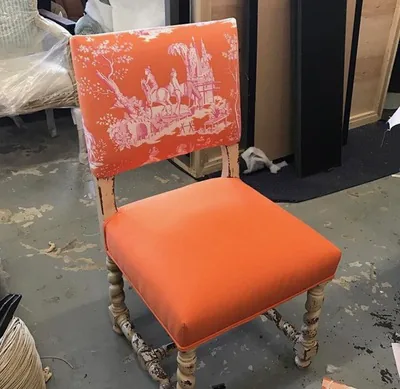
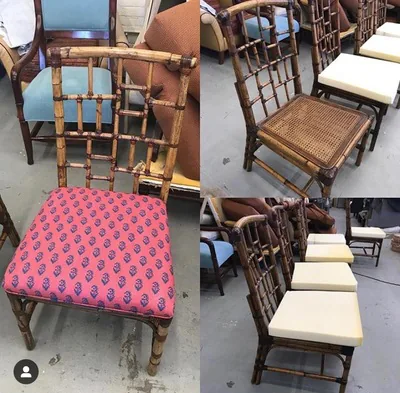
Antique Restoration in New York City, done properly
New York apartments hold more antique furniture than almost any city in the country, and much of it has been recovered badly at least once. A Victorian settee stuffed with foam sits wrong. A Louis XV bergère stapled instead of tacked loses the line of the frame. When an antique comes into our shop we take it back to the frame, document what is original, and rebuild the upholstery the way it was built: webbing, hand tied coil springs, burlap, stuffing, stitched edge rolls, muslin, then the show cover.
On the woodwork side we repair loose and broken joints with hide glue so the piece can be worked on again in another fifty years, replace missing carving and molding, repair veneer and marquetry, and refinish with shellac and French polish or a period appropriate varnish. We do not strip a piece that only needs cleaning and a fresh coat of wax, because the original surface is part of what makes it an antique.
We work on Victorian and Edwardian pieces, French and Italian chairs and settees, American Empire and Federal furniture, Arts and Crafts oak, and early twentieth century club chairs, as well as mid-century classics that are now old enough to need the same care. Period fabrics, horsehair, tufting and nailhead trim are all in-house work. Inherited pieces arriving from an estate elsewhere in the city are a large part of what we do.
How it works
- 1Call or text (914) 449-4334 with photos of the whole piece, the underside and any damage.
- 2We assess what is original, what has been altered, and quote a restoration that respects the piece.
- 3Blanket wrapped pickup across the five boroughs.
- 4Upholstery is removed layer by layer and documented. Frames are repaired with hide glue and traditional joinery.
- 5Springs are hand tied, stuffing rebuilt in horsehair and cotton, edges hand stitched, then the cover applied with tacks where the piece was tacked.
- 6Woodwork is cleaned, repaired and finished with shellac, French polish or wax. Delivered and placed.
What you can hold us to
- Preservation before refinishing: original surfaces and stuffing kept wherever possible
- What is original is documented before any work starts
- Traditional methods: hand tied springs, horsehair, stitched edges, tacks and hide glue
- You deal with a person: Marcos and the workshop team, by name, at (914) 449-4334
- A written quote that says what is being done to each part of the piece
- If we find hidden damage once the old cover is off, you hear about it and approve the price before any extra work is done
- We guarantee the job will be done right, or we will make it right
- Pickup across the five boroughs and Westchester, including estates and storage units
- 25+ years restoring antiques for New York apartments and estates
From a New York customer
More reviews“Marcos is as professional as it gets and truly a hard worker. I was given consistent updates about the progress of the job and photos along the way. I was so nervous to see the final product for no reason at all. My couch and loveseat turned out spectacular.”
Related services
Questions about antique restoration
- How to Restore Antique Furniture After Moving It Into a New York Apartment
- What Is Antique Furniture Refinishing, and When Does a Piece Need It?
- How Do You Repair an Antique Chair Without Ruining Its Value?
- Movers Damaged My Antique. Is the Claim Worth Chasing in New York?
Antique Restoration pickup areas
Antique Restoration questions from New York customers
Is it better to restore an antique or leave it in the condition it is in?
Leave the original finish and patina alone when they are intact, and restore what is failing: loose joints, broken springs, rotted webbing, torn covers, lifting veneer. A chair nobody can sit in is not preserving anything. The aim is the least work that makes the piece sound and usable, done with reversible, period methods.
If reupholstering a Victorian chair, should I keep the original horsehair if it is in good condition?
Yes. Horsehair in good condition still has plenty of spring after a hundred years, and it can be cleaned and reused. We keep the original springs and stuffing where they are sound, replace the cotton and webbing that have failed, and add new horsehair only where the old has been lost. Foam does not belong in a Victorian chair.
Does reupholstering an antique lower its value?
Not when it is done with traditional methods. Rebuilding with hand tied springs, horsehair and tacks preserves value. Foam, staples and stripping an original finish are what hurt it. We document what is original before any work starts.
What is the difference between hand tied springs and modern springs?
Hand tied coil springs are tied to each other and to the frame in eight directions so the seat moves as one surface. Modern sinuous or zigzag springs are cheaper and faster but sit differently. Antiques were built with coils, and we rebuild them the same way.
Can you find period appropriate fabric?
Yes. We source damasks, velvets, horsehair cloth, needlepoint and reproduction prints suited to the period of the piece, and we work with your own fabric from a designer showroom.
Should an antique finish be stripped?
Rarely. An original finish that is dirty or dull is usually cleaned, repaired and waxed. We strip only when the finish has failed or has been painted over, and we say which before starting.
Do you pick up antiques from estates and storage units?
Yes. We collect pieces from estates, storage facilities and dealers across the five boroughs and Westchester, blanket wrapped and insured in transit.
Ask what can be kept original before anything is done
Text photos for a same day quote. Pickup and delivery in all five boroughs, 25+ years of upholstery in New York.