
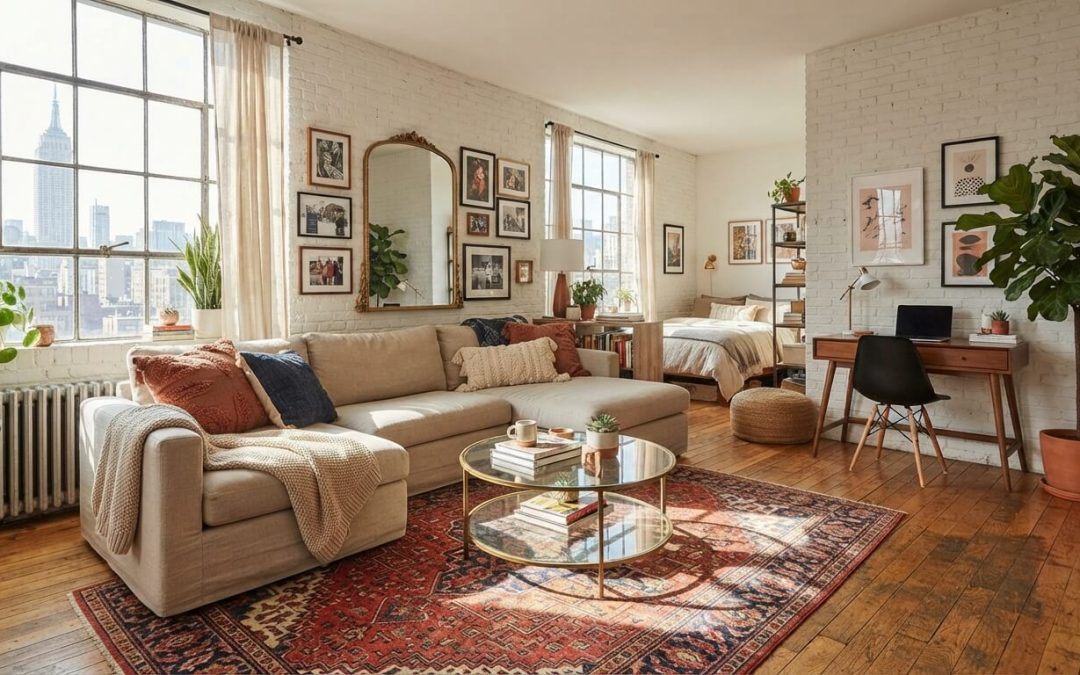
To create a cozy NYC studio apartment, start by measuring your space and planning where everything fits. Choose upholstery that’s both stylish and comfortable, using fabrics like cotton or linen in colors you love. Define functional zones with furniture, utilizing rugs and room dividers for a sense of separation. Arrange furniture for easy movement, prioritizing flow, and consider multi-functional pieces for extra versatility in your limited space. Stick around to uncover even more tips for stylish living!
Assessing Your Space: Measuring and Planning
When you start planning your furniture layout, measuring your space is vital to making the most of your NYC studio apartment.
Begin by taking accurate measurements of your room, including the height, width, and length of walls and windows. Don’t forget to factor in doorways and electrical outlets.
Once you’ve got your dimensions, sketch a floor plan to visualize how different furniture pieces will fit.
Consider traffic flow and functionality; you want to create a cozy, yet practical living area.
Prioritize essential items and leave enough space to move comfortably, ensuring your studio feels open and inviting.
Choosing the Right Upholstery for Comfort and Style
After measuring your space and planning your layout, the next step is selecting upholstery that balances comfort and style.
Consider fabrics that feel good against your skin, like cotton or linen, and choose colors or patterns that reflect your personality.
Don’t forget durability; if you have pets or kids, opt for stain-resistant materials.
Also, think about the weight of the fabric—lighter ones can make your space feel airier, while heavier fabrics can add warmth.
Finally, verify the upholstery complements your existing furniture and overall aesthetic, creating a cohesive look that enhances your studio apartment’s charm.
Defining Zones: Creating Functional Areas in a Studio
One of the keys to maximizing your NYC studio apartment’s potential is defining distinct zones that cater to your lifestyle.
Start by identifying your main activities—sleeping, working, and entertaining. Use furniture to create visual boundaries; a sofa can separate your living area from your sleeping space.
Consider a room divider or bookshelf for additional separation. Rugs can also help delineate zones, providing a cozy feel.
Make certain each area has its own purpose, like a small desk for work or a comfortable chair for reading.
Arranging Furniture for Optimal Flow and Space
To create a functional and inviting atmosphere in your studio apartment, it’s essential to arrange your furniture for ideal flow and space.
Start by placing larger pieces, like your bed or sofa, against a wall to maximize floor area. Guarantee pathways between furniture are clear, allowing for easy movement.
Consider the natural traffic patterns; arrange seating to encourage conversation while keeping the space open. Use rugs to define areas without blocking flow.
Finally, keep frequently used items within reach, and avoid overcrowding to maintain an airy, spacious feel. Thoughtful placement transforms your studio into a cozy, efficient retreat.
Incorporating Multi-Functional Pieces for Versatility
While maneuvering through the challenges of a studio apartment, incorporating multi-functional pieces can greatly enhance your living space.
Opt for a sofa bed that doubles as a comfortable seating area by day and a cozy bed by night. Consider a coffee table with storage or an ottoman that can serve as both seating and a footrest.
Folding desks are perfect for work or study, easily tucking away when not in use. Using these versatile options not only maximizes functionality but also keeps your space organized and stylish.
Embrace creativity and practicality to make the most of your studio’s limited square footage.
Frequently Asked Questions
How Do I Choose a Color Scheme for My Upholstery?
Choose a color scheme by considering your space’s mood, existing decor, and personal style.
Use a color wheel for inspiration, and don’t hesitate to mix patterns for a unique, cohesive look that reflects your personality.
What Are the Best Materials for Upholstery in Small Spaces?
For small spaces, consider lightweight fabrics like linen or cotton blends.
They’re durable and easy to clean.
Faux leather’s also great for a sleek look, while performance fabrics resist stains and wear, keeping your space stylish.
How Often Should I Clean My Upholstered Furniture?
You should clean your upholstered furniture every six months, but if you have kids or pets, consider doing it every three months.
Regular vacuuming helps maintain its appearance and prolongs the life of the upholstery.
Can I Mix Different Upholstery Patterns in My Studio?
Absolutely, you can mix different upholstery patterns in your studio!
Just guarantee they complement each other in color or style.
Balance bold patterns with subtle ones to create a cohesive, inviting atmosphere.
What Are the Best Upholstery Options for Pet Owners?
For pet owners, choose durable fabrics like microfiber, leather, or outdoor materials.
They’re easy to clean and resistant to stains and scratches.
You’ll appreciate how they withstand wear while keeping your space stylish and comfortable.
Conclusion
By considering these tips, you can transform your NYC studio into a stylish and functional space. Measure and plan your layout thoughtfully, choose upholstery that balances comfort and aesthetic appeal, and define zones to enhance usability. Remember to arrange your furniture for smooth flow and incorporate multi-functional pieces to maximize your space. With a little creativity, your studio can be both a cozy retreat and a stylish haven that reflects your personal taste.