
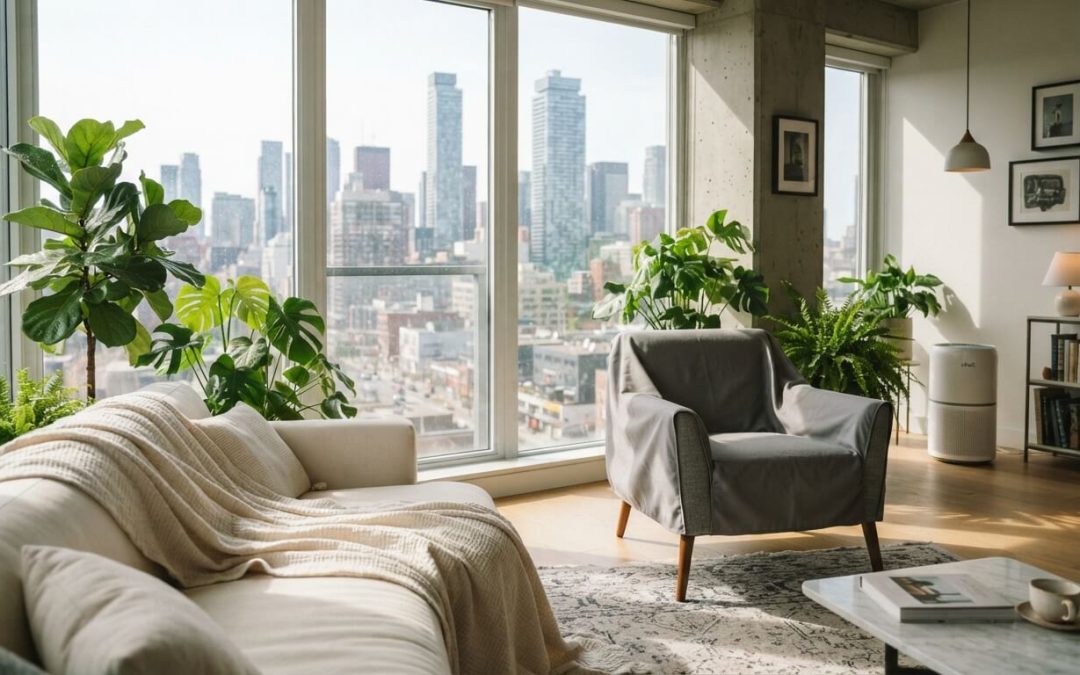
To protect your upholstery from humidity, dust, and city pollution, maintain a humidity level between 30% and 50%. Regularly vacuum using a brush attachment to lift dust and consider air purifiers. Choose durable, stain-resistant fabrics and keep furniture away from windows. Use fabric protectors and slipcovers for added defense against dirt. Rotate cushions and act quickly on stains. Stay tuned for more tips on effective maintenance and cleaning techniques that can help keep your upholstery looking its best.
Understanding the Impact of Humidity on Upholstery
When you consider the health of your upholstery, humidity plays a vital role in its longevity. High humidity can cause fabrics to absorb moisture, leading to mold and mildew growth. This not only damages your upholstery but can also affect indoor air quality.
Conversely, low humidity can dry out materials, causing them to crack or fade. You need to strike a balance. Regularly check humidity levels in your home, ideally keeping them between 30% and 50%.
Investing in a dehumidifier or humidifier can help maintain this range, ensuring your upholstery stays in top condition for years to come.
Tips for Reducing Dust Accumulation
Maintaining balanced humidity levels not only protects your upholstery from moisture damage but also helps in minimizing dust accumulation.
To keep dust at bay, vacuum your upholstery regularly with a brush attachment. This helps lift dust particles without damaging the fabric.
Consider using air purifiers with HEPA filters to trap airborne dust, and make sure to clean them frequently for peak performance.
Additionally, wash or replace your curtains and cushions regularly, as they can harbor dust.
Finally, implement a no-shoes policy indoors to reduce dirt and dust tracked in from outside, keeping your upholstery cleaner for longer.
Choosing the Right Fabrics for Urban Environments
How do you choose the right fabrics for urban environments? First, consider durability. Look for materials like microfiber or synthetic blends that resist wear and tear.
Next, prioritize stain resistance; fabrics treated with protective coatings can fend off spills. Opt for darker colors or patterns that can hide dust and grime better than lighter shades.
Additionally, moisture-wicking fabrics help combat humidity and prevent mold growth. Finally, think about breathability; natural fibers like cotton or linen can keep your space comfortable.
Regular Maintenance and Cleaning Techniques
Regular upkeep is essential for preserving your upholstery’s appearance and longevity. Start by vacuuming weekly to remove dust and debris. Use a soft brush attachment to avoid damaging the fabric.
For stains, act quickly—blot, don’t rub, with a clean cloth and a mild cleaner. Test any cleaning solution on a hidden area first.
Rotate cushions regularly to guarantee even wear and maintain shape. If your upholstery is removable, consider professional cleaning every few years.
Finally, avoid direct sunlight, as it can fade colors and weaken fibers. Keeping up with these simple techniques will keep your upholstery looking fresh and vibrant.
Implementing Protective Measures Against Pollution
While you may not be able to control the pollution in your environment, implementing protective measures can greatly reduce its impact on your upholstery.
Start by applying a fabric protector that repels dirt and contaminants. Use slipcovers or throws to shield your furniture from pollutants and wear.
Regularly vacuum to remove dust and debris that may settle into fibers. Consider using air purifiers to minimize airborne particles.
Finally, avoid placing your upholstery near windows where pollutants can enter.
Frequently Asked Questions
How Often Should I Vacuum Upholstered Furniture?
You should vacuum upholstered furniture at least once a week.
If you have pets or allergies, consider doing it more often.
Regular vacuuming keeps your furniture looking fresh and helps maintain a healthy environment.
Can I Use a Dehumidifier for Upholstery Protection?
Yes, you can use a dehumidifier for upholstery protection.
It helps reduce moisture in the air, preventing mold and mildew.
Just make sure to monitor humidity levels to keep your furniture in great condition.
What Are the Best Indoor Plants for Air Quality?
Spider plants, peace lilies, and snake plants are some of the best indoor plants for air quality.
They filter toxins and release oxygen, making your space healthier while adding a touch of greenery to your home.
Are There Specific Sprays for Protecting Upholstery?
Yes, there are specific sprays designed to protect upholstery.
Look for fabric protectors that repel stains and moisture.
Just apply them evenly, and you’ll enhance your furniture’s durability while keeping it looking fresh and clean.
How Do I Know if My Upholstery Needs Professional Cleaning?
You’ll know your upholstery needs professional cleaning if you notice persistent stains, odors, or discoloration.
If it looks dingy despite regular cleaning, it’s time to call in the experts for a deep refresh.
Conclusion
By taking proactive steps, you can effectively safeguard your upholstery from humidity, dust, and city pollution. Remember to choose the right fabrics, maintain a regular cleaning routine, and implement protective measures to keep your furniture looking fresh and durable. With these strategies in place, your upholstery will not only withstand the challenges of urban living but also enhance your home’s comfort and aesthetics. Stay vigilant, and enjoy your beautifully protected space!