
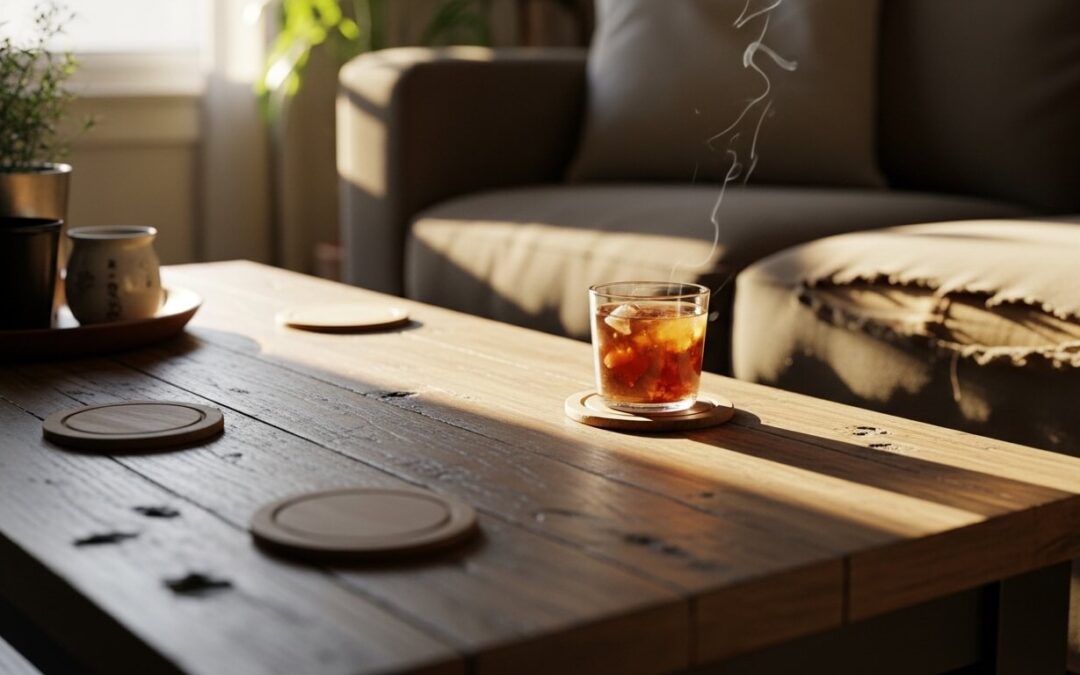
To protect your furniture in NYC, tackle common problems like water rings, torn cushions, and stains. Use coasters for drinks to prevent water rings and address them quickly with a cloth and a mix of olive oil and vinegar. Regularly fluff and rotate cushions to maintain their shape, and use slipcovers for pet protection. Act fast on spills, blotting instead of rubbing. With these tips, you can keep your furniture looking great while discovering more solutions along the way.
The Battle Against Water Rings: Tips for Protecting Surfaces
When you host friends or enjoy a quiet evening at home, it’s easy to forget that water rings can silently damage your furniture. To protect your surfaces, always use coasters for drinks.
If you notice a ring forming, act quickly; gently rub the area with a soft cloth and a mixture of olive oil and vinegar to restore its shine. You can also consider applying a protective wax or sealant to create a barrier against moisture.
Finally, keep your furniture away from direct sunlight to prevent fading and cracking. Taking these steps will help maintain your furniture’s beauty and longevity.
Cushion Care: Preventing Tears and Maintaining Shape
To keep your cushions looking fresh and comfortable, it’s essential to take proactive steps in their care.
First, regularly fluff your cushions to maintain their shape and prevent flattening. Rotate them every few weeks to guarantee even wear.
Avoid sitting on the edges, as this can lead to tears over time. If you have pets, consider using slipcovers to protect against scratches and hair.
Clean spills immediately with a mild detergent and water, but avoid soaking the fabric.
Finally, keep your cushions away from direct sunlight to prevent fading and deterioration.
Scratches and Scuffs: Keeping Your Furniture Flawless
Although scratches and scuffs can be frustrating, there are effective ways to keep your furniture looking pristine.
First, use coasters and placemats to protect surfaces from daily wear and tear. When moving furniture, lift instead of dragging to avoid damage.
Regularly check for loose screws or hardware, tightening them as needed to prevent wobbling that can lead to scratches. For minor scuffs, a soft cloth and a little furniture polish can work wonders.
Consider using felt pads under heavy items to minimize impact. With these simple steps, you can maintain your furniture’s beauty and extend its lifespan.
Dust and Allergens: Best Practices for Regular Cleaning
Since dust and allergens can accumulate quickly in your home, establishing a regular cleaning routine is essential for maintaining a healthy living environment.
Start by dusting surfaces weekly with a microfiber cloth, which traps dust instead of spreading it around.
Don’t forget to vacuum carpets and upholstery regularly, ideally with a HEPA-filter vacuum to capture allergens effectively.
Wash bedding in hot water weekly, and consider using allergen-proof covers on pillows and mattresses.
Finally, keep windows closed during high pollen seasons and use an air purifier to help reduce airborne particles, ensuring you and your furniture stay dust-free and comfortable.
Stains and Spills: Quick Fixes for Common Accidents
When accidents happen and spills occur, knowing how to tackle stains quickly can save your furniture from permanent damage.
First, act fast—blot the stain with a clean cloth instead of rubbing it, which can spread the mess.
For water-based spills, a mixture of mild soap and water usually works well; just test it on a hidden area first.
For oil stains, sprinkle baking soda to absorb the grease.
If you’re dealing with red wine, sprinkle salt immediately to soak it up.
Always follow up with a professional cleaner for stubborn stains, ensuring your furniture stays looking its best.
Frequently Asked Questions
How Can I Choose the Right Furniture for My NYC Apartment?
To choose the right furniture for your NYC apartment, consider your space’s dimensions.
Prioritize multifunctional pieces, and select materials that endure wear.
Don’t forget to factor in your personal style and comfort preferences too!
What Materials Are Most Resistant to Nyc’s Humid Climate?
For NYC’s humid climate, choose materials like teak, eucalyptus, or aluminum for outdoor furniture.
Inside, opt for synthetic fabrics and leather, as they resist moisture and mold, ensuring your furniture stays in excellent condition longer.
How Often Should I Professionally Clean My Furniture?
You should professionally clean your furniture every six to twelve months, depending on usage and exposure to dirt or moisture.
Regular maintenance helps preserve its appearance and longevity, ensuring your pieces remain in great condition.
What Are the Best Storage Solutions for Small NYC Spaces?
Utilize multi-functional furniture, like storage ottomans and beds with drawers.
Wall-mounted shelves maximize vertical space, while under-bed storage keeps items out of sight.
Consider collapsible furniture for flexibility and easy organization in your small NYC space.
How Can I Prevent Furniture Damage During a Move?
To prevent furniture damage during a move, you should disassemble items when possible, use protective padding, secure everything tightly in the truck, and avoid stacking heavy items on fragile ones.
Your furniture will thank you!
Conclusion
By staying proactive and following these tips, you can keep your NYC furniture looking its best. Protect surfaces from pesky water rings, maintain your cushions to prevent tears, and keep scratches at bay. Regular cleaning helps minimize dust and allergens, while quick fixes for stains can save the day. Remember, a little care goes a long way in preserving your furniture’s appearance and longevity, allowing you to enjoy your space without the stress of common problems.