
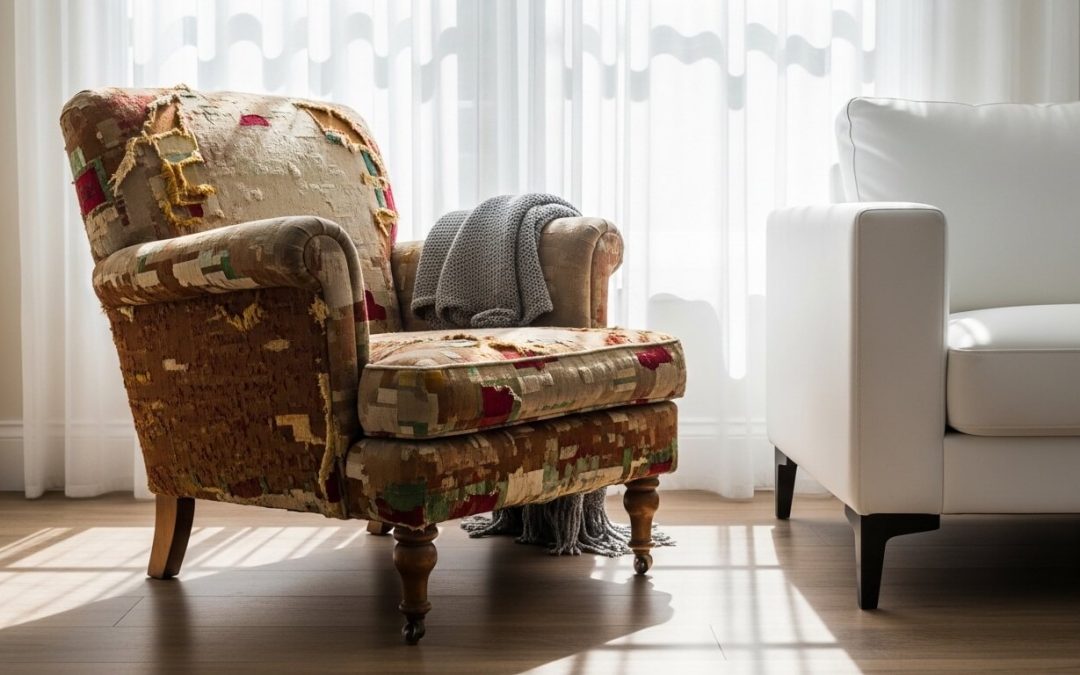
When your furniture shows signs of wear, like frayed edges or sagging cushions, it’s time to contemplate reupholstering. If it holds sentimental value and still feels comfortable, don’t rush to replace it. Reupholstering can often be more cost-effective while extending the life of quality pieces. Plus, you can choose fabrics that match your current style. Want to learn more about making the right decision for your beloved furniture? There’s plenty more to explore!
Signs of Wear and Tear
When you start noticing frayed edges, faded colors, or sagging cushions on your furniture, it’s a clear sign that wear and tear has taken its toll.
Look for loose seams, stains that won’t come out, or a noticeable lack of support when you sit down. If your favorite chair creaks or feels unstable, it’s time to assess its condition.
Scratches or dents on wooden frames also indicate it’s been through a lot. Pay attention to how it feels and looks in your space.
If you find yourself avoiding it, you might just need to contemplate reupholstering.
Sentimental Value vs. Practicality
How do you balance sentimental value with practicality when considering reupholstery?
It’s essential to weigh your emotional attachment against the piece’s condition and functionality. If that old chair holds cherished memories but is falling apart, ask yourself if it’s worth the investment.
Consider how often you use it and if it fits your current lifestyle. Sometimes, a fresh design can breathe new life into a beloved item, making it both practical and meaningful.
Ultimately, trust your instincts; if it sparks joy and serves a purpose, reupholstering could be the perfect way to honor both sentiment and practicality.
Cost Comparison: Reupholstery vs. Replacement
While you might be tempted to toss an old piece of furniture, reupholstery can often be a more cost-effective option than buying new.
New furniture can come with a hefty price tag, while reupholstering allows you to refresh your existing piece at a fraction of the cost.
Consider the quality of your furniture; if it’s well-made, investing in reupholstery can extend its life considerably.
Additionally, you can choose fabrics that suit your style without breaking the bank.
Assessing Comfort and Functionality
Reupholstering isn’t just about aesthetics; comfort and functionality play a significant role in your decision-making process.
Evaluate how well your furniture meets your daily needs. Is the seating still supportive, or do you find yourself sinking in? Check the armrests and back for adequate support.
Think about how you use the piece—does it still fit your lifestyle? If it’s a frequently used chair, comfort is paramount.
Consider any mobility issues or changes in your household that might affect how you interact with your furniture.
If it’s still functional and comfortable, reupholstering is a smart choice.
Choosing the Right Fabric and Style
When it comes to choosing the right fabric and style for your reupholstered furniture, consider both your aesthetic preferences and the practical demands of your household.
Think about your lifestyle—if you have kids or pets, opt for durable, stain-resistant materials. For a more formal space, luxurious fabrics like velvet or silk might suit your taste.
Don’t forget about color and pattern; they can transform a piece while complementing your existing décor.
Finally, choose a style that aligns with your home’s overall vibe, whether it’s modern, rustic, or classic. Make sure it reflects you while meeting everyday needs.
Frequently Asked Questions
How Long Does Reupholstering Typically Take?
Reupholstering typically takes about one to three weeks, depending on the complexity and the shop’s workload.
You’ll want to check with your upholsterer for a more accurate timeline based on your specific project.
Can I Reupholster Furniture Myself?
Yes, you can reupholster furniture yourself!
It requires some basic tools, sewing skills, and patience.
Start with smaller pieces to build your confidence, and soon you’ll tackle larger projects with ease and creativity.
What Types of Furniture Are Best for Reupholstery?
Sofas, chairs, and ottomans are best for reupholstery.
These pieces often withstand wear and tear, and their frames can be sturdy.
You’ll enjoy a refreshed look while keeping quality furniture in your home.
Is There a Warranty on Reupholstered Furniture?
Typically, reupholstered furniture doesn’t come with a warranty unless specified by the upholsterer.
You should ask about their policy beforehand to guarantee you’re covered for any potential issues after the work is completed.
How Do I Choose a Reputable Upholsterer?
To choose a reputable upholsterer, research local options, read reviews, ask for recommendations, check their portfolio, and inquire about warranties.
Meeting them in person can also help you gauge their professionalism and expertise.
Conclusion
In the end, deciding whether to reupholster or replace your furniture comes down to a mix of practicality and sentiment. If your pieces show signs of wear but hold sentimental value, reupholstery can breathe new life into them. Consider the costs and assess their comfort and functionality. With the right fabric and style, your cherished furniture can look and feel like new again, making it worth the investment. Trust your instincts, and you’ll make the right choice!